
Gigapixel Photography for National Parks, Museums & Visitor Centers
Extraordinary landscapes, immersive visual experiences, providing new opportunities for exploration, discovery and learning.
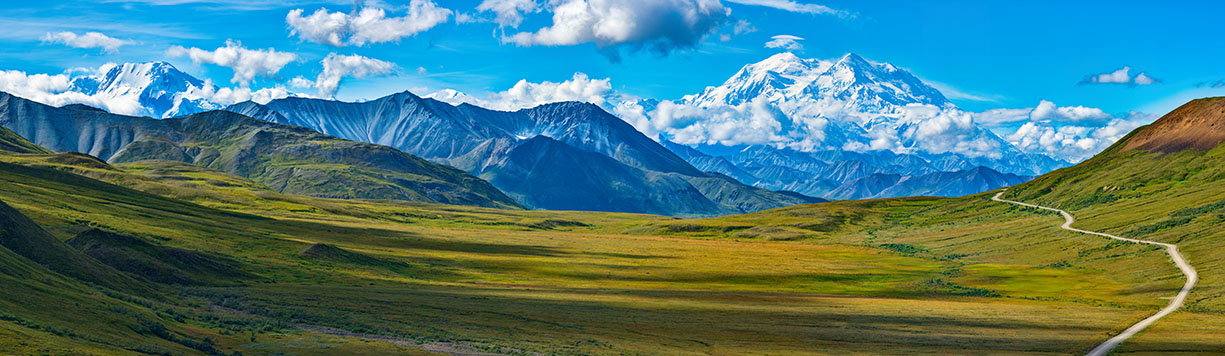
Denali with Lenticular Cloud Crown — Denali National Park, Alaska
Click the image to explore Denali with Lenticular Cloud Crown in full gigapixel detail.
Gigapixel photography for national parks, museums and visitor centers can do more than show visitors a landscape. It can invite them to explore it.
True gigapixel photography captures billions of pixels of genuine photographic detail, creating images that can be explored far beyond the limits of conventional photography. A sweeping landscape becomes a visual environment where visitors can move from the complete scene into remarkable details—geological formations, vegetation, wildlife habitat, historic features and other discoveries that might otherwise go unnoticed.
For national parks, museums, visitor centers and educational institutions, that extraordinary resolution creates new possibilities for interpretation, exhibits and interactive learning.
What Makes Gigapixel Photography Different?
A conventional photograph is designed primarily to be viewed as a whole.
A true gigapixel photograph is different. It contains billions of pixels of captured photographic information, allowing the viewer to move from the complete landscape into increasingly fine details while retaining remarkable clarity.
That means a single image can function at several levels at once: as a dramatic landscape, as a detailed record of place, and as an interactive environment for exploration and interpretation.
From Landscape to Discovery
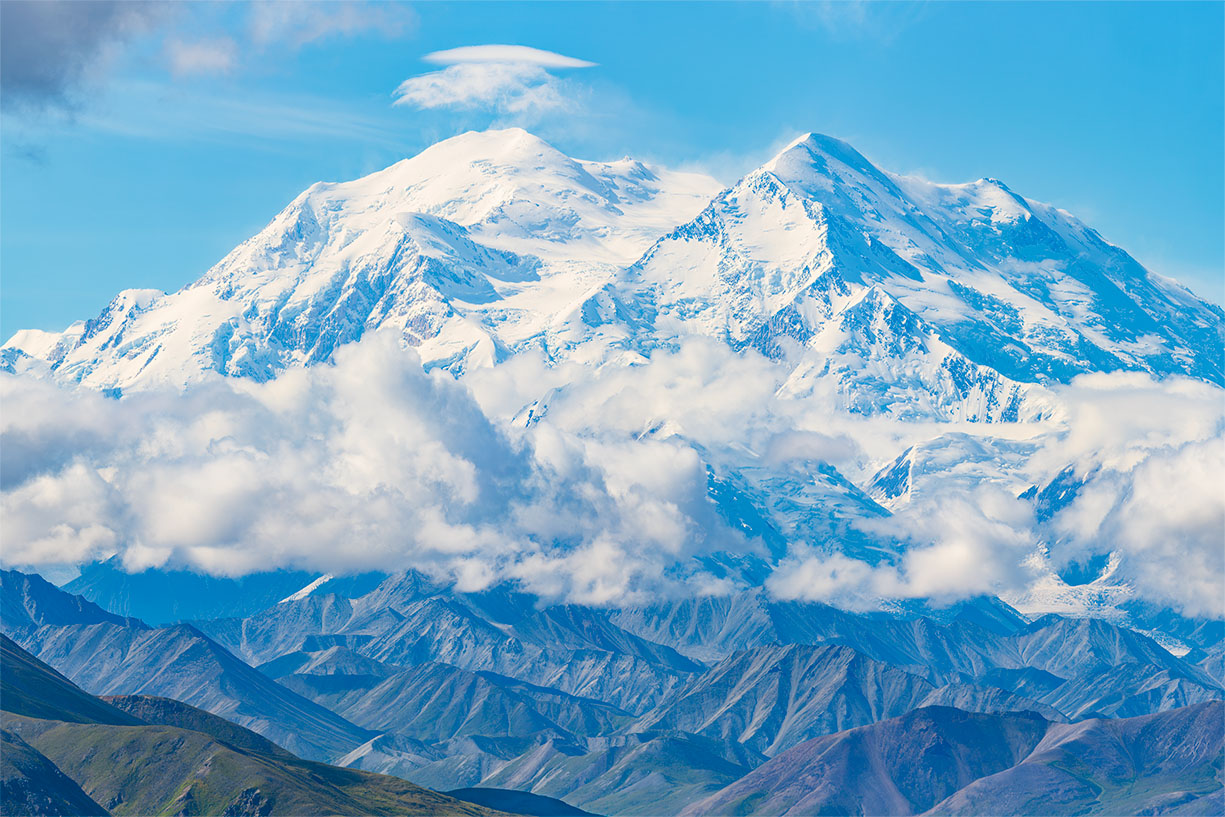
A closer view reveals Denali’s glaciers, ice fields and complex mountain terrain.

Look closer still: a lenticular cloud forms above Denali while high winds drive plumes of snow across the summit.
This detail is genuine photographic information—not AI-generated detail. Every detail you see was captured in the original gigapixel image.
For museums, parks and visitor centers, that difference matters. Gigapixel imagery can reveal real features within a landscape and create opportunities for interpretation, education and discovery.
Interactive Gigapixel Demonstration — Explore the Grand Canyon
One photograph. Billions of pixels. A landscape visitors can explore rather than simply observe.
This 6.03-gigapixel photograph was created from 189 individual photographs captured from Cape Royal on the North Rim of the Grand Canyon. The demonstration begins with the complete landscape, then travels deep into the canyon to reveal rapids on the Colorado River before returning to a wider view and crossing the canyon to the Desert View Watchtower on the South Rim.
Applications for Parks, Museums & Visitor Centers
A gigapixel photograph can be far more than a finished image. Its extraordinary resolution allows a single photograph to become an interpretive, educational and architectural resource that can be adapted to many different institutional settings.
National Parks & Visitor Centers
Interactive gigapixel displays can help visitors explore viewpoints, landmarks, trails, geological formations and other features in far greater detail than conventional photography allows. A broad landscape can become a visual journey through the individual features that define a place.
Museums & Science Centers
Gigapixel imagery can support exhibits in geology, geography, natural history, environmental science and cultural interpretation by allowing visitors to examine a single landscape at multiple scales—from the complete environment to details that might otherwise go unnoticed.
Universities & Educational Institutions
High-resolution landscape imagery can become a teaching and research resource for geology, geography, ecology and environmental studies, particularly when combined with interpretive labels, interactive hotspots or other educational content.
Accessibility
Interactive imagery can give visitors an opportunity to closely explore locations they may not be able to physically reach, including distant overlooks, rugged terrain and remote natural or cultural features.
Custom Interpretive Projects
Existing gigapixel photographs can be adapted for displays and exhibits, or new imagery can be commissioned for a specific location, interpretive program or educational objective.
The same gigapixel master can support interactive exhibits, wall-scale installations, educational media and online exploration.
From Gigapixels to Exhibit-Scale Experiences
Gigapixel photography is not limited to interactive displays. The same extraordinary resolution that allows visitors to explore fine details on a screen also allows a photograph to be reproduced at exceptional scale for museum exhibits, visitor centers, interpretive spaces and architectural environments.
Frozen In Time — Rocky Mountain National Park
Frozen In Time was photographed at Dream Lake in Rocky Mountain National Park, Colorado. The image records the winter landscape and the unusual wind-sculpted ice formations that develop on the frozen lake.
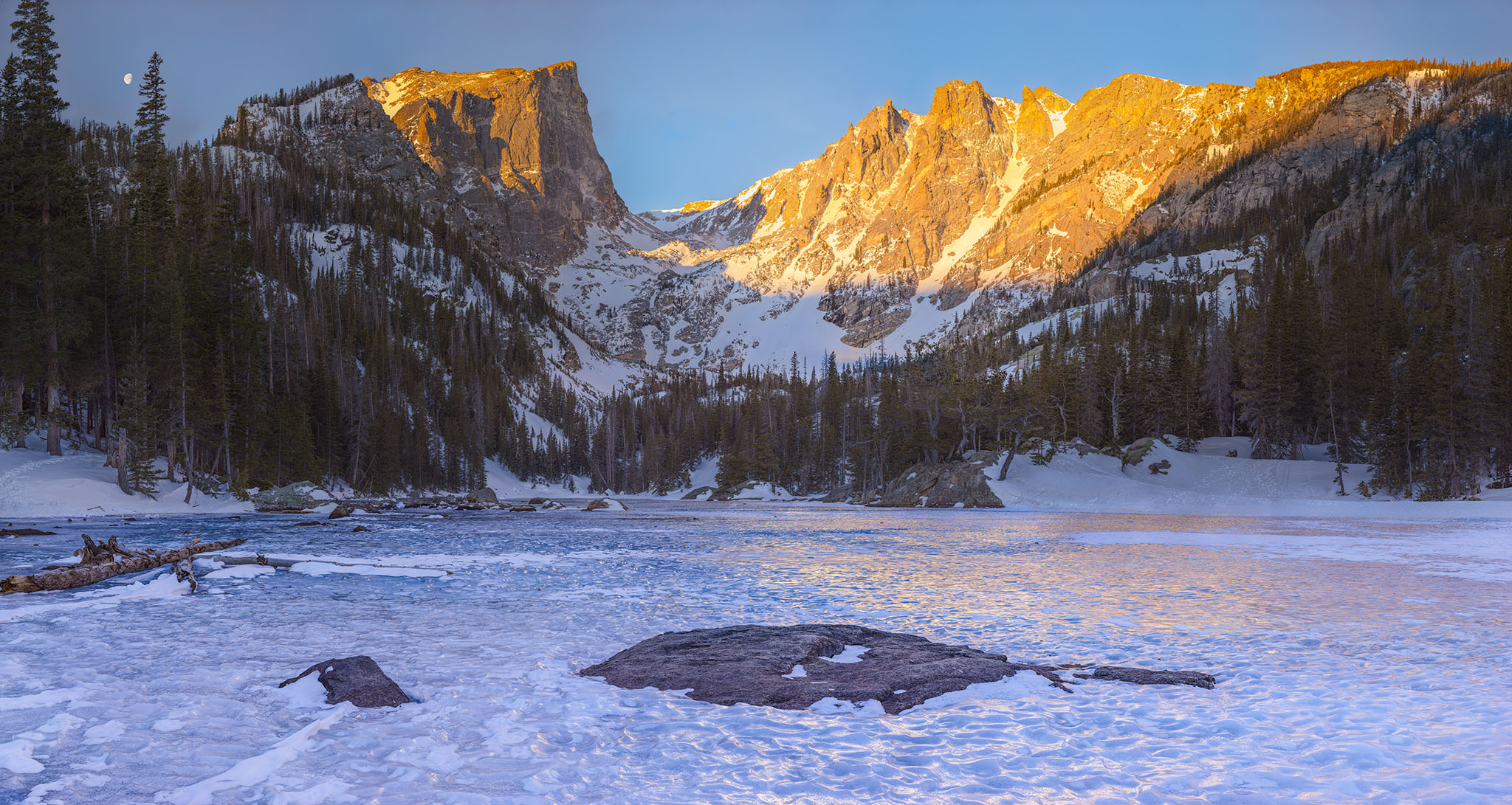
Frozen In Time — Dream Lake, Rocky Mountain National Park, Colorado
Click the image to explore Frozen In Time in full gigapixel detail.
This 4.63-gigapixel photograph was constructed from 7,090 individual focus-bracketed photographs, creating billions of pixels of genuine captured photographic detail. The completed image contains enough native photographic resolution for a reproduction approximately 13 feet 9 inches high by 25 feet 10 inches wide at 300 PPI.
One photograph can become both a detailed interpretive resource and an architectural-scale visual experience.
For parks, museums and visitor centers, this combination creates unusual possibilities: a landscape can become an immersive physical environment while preserving the extraordinary detail of the original photograph.
Photography, Technology & Experience
John Freeman has worked with photography and digital imaging for more than six decades, combining a photographer’s eye with an engineering and technical background. His gigapixel landscapes are created through a proprietary photographic workflow, developed and refined over many years, in which hundreds to thousands of individual high-resolution photographs are precisely captured and assembled into a single image containing billions of pixels of genuine photographic detail. Freeman has also taught advanced photographic workshops sharing the techniques behind high-resolution panoramic and focus-stacked imagery.
Based in Colorado, Freeman has photographed landscapes throughout the United States and internationally, creating imagery designed not only as fine art, but also for large-scale reproduction, interactive exploration, commercial licensing and educational use.
Bring a Landscape Into Your Visitor Experience
Whether the goal is an interpretive exhibit, interactive display, architectural-scale installation or educational resource, existing gigapixel imagery can be adapted to a project or new photography can be commissioned for a specific location and purpose.
Projects can be developed in collaboration with park staff, museum professionals, exhibit designers, interpretive planners, architects and educational institutions.